



proceso de línea de decapado de acero
In the highly specialized world of electrical steel production, the final material properties are not solely determined by chemistry or high-temperature annealing but are meticulously imprinted in a critical cold mechanical process. The temper mill , often referred to as the temper pass mill , is the machine where the culmination of metallurgical effort is refined and perfected. This process, known as temper rolling , involves a minimal cold reduction, typically between 0.5% and 3%, applied to a previously annealed strip. For silicon steel, a material prized for its magnetic permeability and low core loss in transformers and electric motors, this seemingly simple pass is anything but. It is a delicate balancing act of mechanical stress and precise control, where the ultimate magnetic performance of the steel is either achieved or compromised. The operation of a high precise temper mill is therefore paramount, transforming it from a simple finishing stand into the final arbiter of product quality. The heart of this precision lies in the sophisticated art and science of tension control, a factor that directly dictates the performance and output of this essential equipment. The Delicate Science of Temper Rolling and Its Impact on Magnetic Properties The primary function of the temper rolling process for silicon steel is to impart the ideal surface finish and to precisely control the yielding behavior of the material. After annealing, the steel strip is fully softened, possessing a yield point elongation that, if left unaddressed, would lead to the formation of Lüders bands—unsightly surface streaks—during subsequent stamping or forming. The light reduction of the temper pass mill eliminates this phenomenon, ensuring a homogenous and flawlessly smooth surface upon deformation. However, for silicon steel, the implications run far deeper than cosmetics. The mechanical stress applied by the work rolls alters the dislocation density and introduces specific, controlled defects into the crystal lattice. This has a profound effect on the magnetic domain structure. The goal is not to harden the material but to optimize its magnetic response. Excessive cold work can increase hysteresis losses, degrading magnetic performance. Just the right amount, however, can refine the magnetic domains, reducing eddy current losses and improving overall efficiency. This intricate interplay between mechanical deformation and electromagnetic properties places extraordinary demands on the mill. It necessitates a high quality temper rolling mill capable of exerting immense control over every variable, with strip tension being the most critical among them. The Central Nervous System: Advanced Tension Control in a High Precise Temper Mill In any rolling operation, tension is the invisible force that pulls the strip through the mill. In a temper mill , its role is elevated from a mere handling aid to a primary process parameter. Precise tension control is the cornerstone of a high precise temper mill 's capability. It is the system that ensures strip flatness, prevents slippage or breakage, and, most importantly, guarantees a uniform and consistent reduction across the entire strip width and length. The control system is a complex, closed-loop network involving load cells, precision tension meters, and inertial-compensated drives on the payoff (PO) and tension reel (TR). For a modern 900 temper mill processing high-grade non-grain oriented (NGSO) silicon steel, the tension setpoints are not static numbers; they are dynamically calculated and adjusted based on incoming strip gauge, width, yield strength, and the desired elongation percentage. The principle is one of equilibrium. The tension applied upstream by the payoff reel and downstream by the tension reel must be in perfect harmony with the roll gap pressure and the mill speed. Any deviation—a tension spike or trough—translates directly into a variation in elongation. A momentary loss of tension can cause a section of the strip to receive less reduction, creating a soft spot with different magnetic properties. Conversely, excessive tension can overwork the material, increasing hardness beyond specification and harming the core loss values. The architecture of the mill plays a role here; a robust 800 temper mill might rely on well-tuned analog controls, while a modern 900 temper mill will employ full digital automation with vector-controlled AC drives offering torque control accuracy within fractions of a percent. This allows for breathtakingly smooth acceleration and deceleration during threading and tail-out, the phases where tension is most vulnerable to destabilization. The system must also account for inertial effects as the diameter of the payoff and recoil reels changes, constantly recalculating torque requirements to maintain a constant pounds-per-linear-inch (PLI) tension. This relentless precision is what defines a true high quality temper rolling mill . Temper Mill ’ s Performance Optimization: Integrating Tension with Mill Dynamics Optimizing the performance of a temper mill in silicon steel production extends beyond maintaining perfect tension loops. It involves the holistic integration of tension with all other mill functions to achieve a state of process stability that guarantees batch-to-batch consistency. One critical interplay is between tension and roll gap control. The mill stand is equipped with hydraulic gap control (HGC) systems that maintain a constant force, but this force interacts with the strip tension. The control system must model this interaction to ensure that the intended reduction is achieved without creating shape defects like buckles or waves. Furthermore, the surface finish of the work rolls is a critical variable. As the rolls wear over time, the coefficient of friction changes, which can subtly influence the required torque and tension to achieve the same elongation. A performance-optimized mill will have a roll wear model integrated into its control logic, making minor compensatory adjustments to maintain product uniformity. For a 900 temper mill , data integration is key to optimization. Every coil processed generates a terabyte of data—tracking tension, speed, force, elongation, and power consumption millisecond by millisecond. Advanced analytics and machine learning algorithms can pore over this data to identify subtle correlations and precursors to off-spec product. For instance, a specific oscillation pattern in the payoff tension might be identified as a predictor of a subpar magnetic test result later on. This allows for pre-emptive adjustment, moving the process from reactive control to predictive optimization. The ultimate goal is to achieve a "Golden Batch" state and then lock in those parameters, ensuring that every coil of a specific grade and gauge is processed in an identical manner, thereby guaranteeing that the magnetic properties are not just within specification, but are consistently at the premium end of the tolerance band. Temper Mill : The Consequences of Failure and the Pursuit of Perfection The high stakes of silicon steel production mean that failures in temper rolling are exceptionally costly. Inconsistent tension leading to variable elongation will manifest as fluctuations in magnetic core loss across the length of a coil. When this coil is punched into laminations and assembled into the core of a transformer or motor, these inconsistencies create localized hotspots and acoustic noise (hum), reducing the efficiency and lifespan of the electrical device. For the producer, this results in customer rejections, downgrades, and a damaged reputation in a market where quality is paramount. Therefore, investing in a modern, high precise temper mill with an advanced tension control system is not merely a capital expense; it is a strategic imperative. It is the final, crucial step in the manufacturing chain that protects the value added by all previous processes—from melting and hot rolling to annealing and coating. By mastering the invisible force of tension, operators of the temper mill do not just process metal; they calibrate the very electromagnetic soul of the silicon steel, ensuring it meets the exacting standards required to power the modern world efficiently.

We have successfully executed over 500
projects around the world,
many first-of-their-kind
research projects and products in China, including
We have successfully executed over 500
projects around the world,
many first-of-their-kind
research projects and products in China, including
-
2004
The 1st hydraulic AGC system for hot rolling of ribbon steel
-
2006
The 1st AFC system used for 1450mm skin pass mill
-
2009
The 1st 5-stand tandem line with 2-stand POR & Uncoiler for 650mm ribbon steel
-
2012
The 1st reversing mill for 1380mm strip
-
2016
The 1st soft-rolling system used in skin pass mill
-
2019
The 1st fully automated medium-width tandem cold rolling mill
-
2021
The 1st 5000KN Twin-stand double skin pass mill
-
2022
The 1st coupled pickling line & tandem cold mill with two modes - big roller & small roller
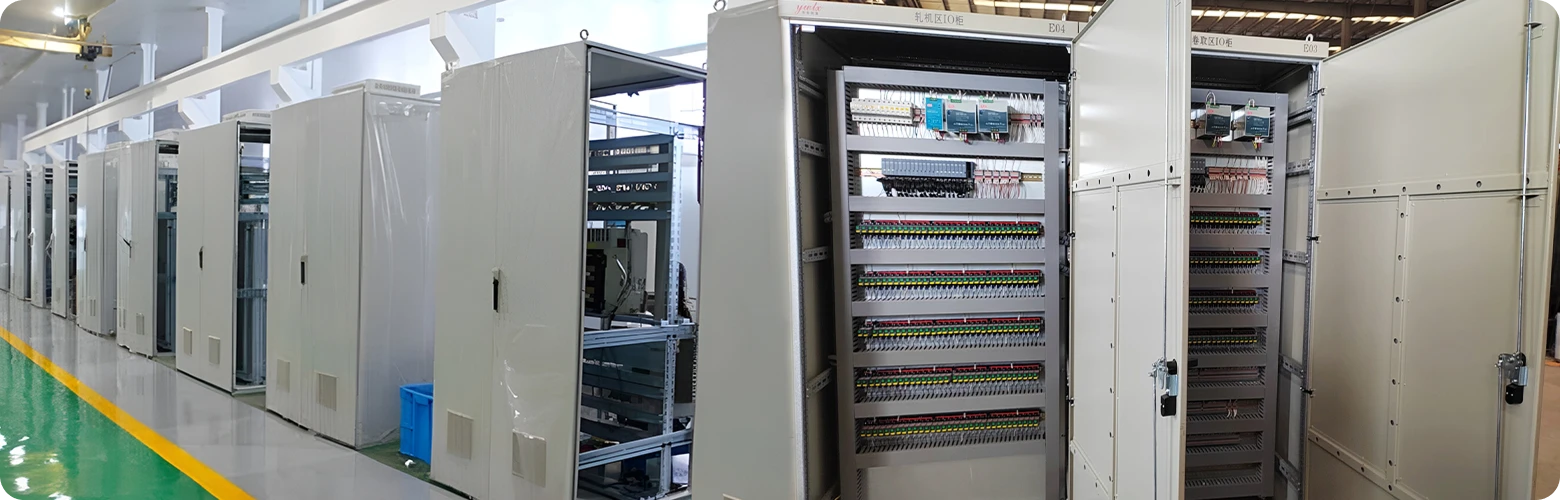
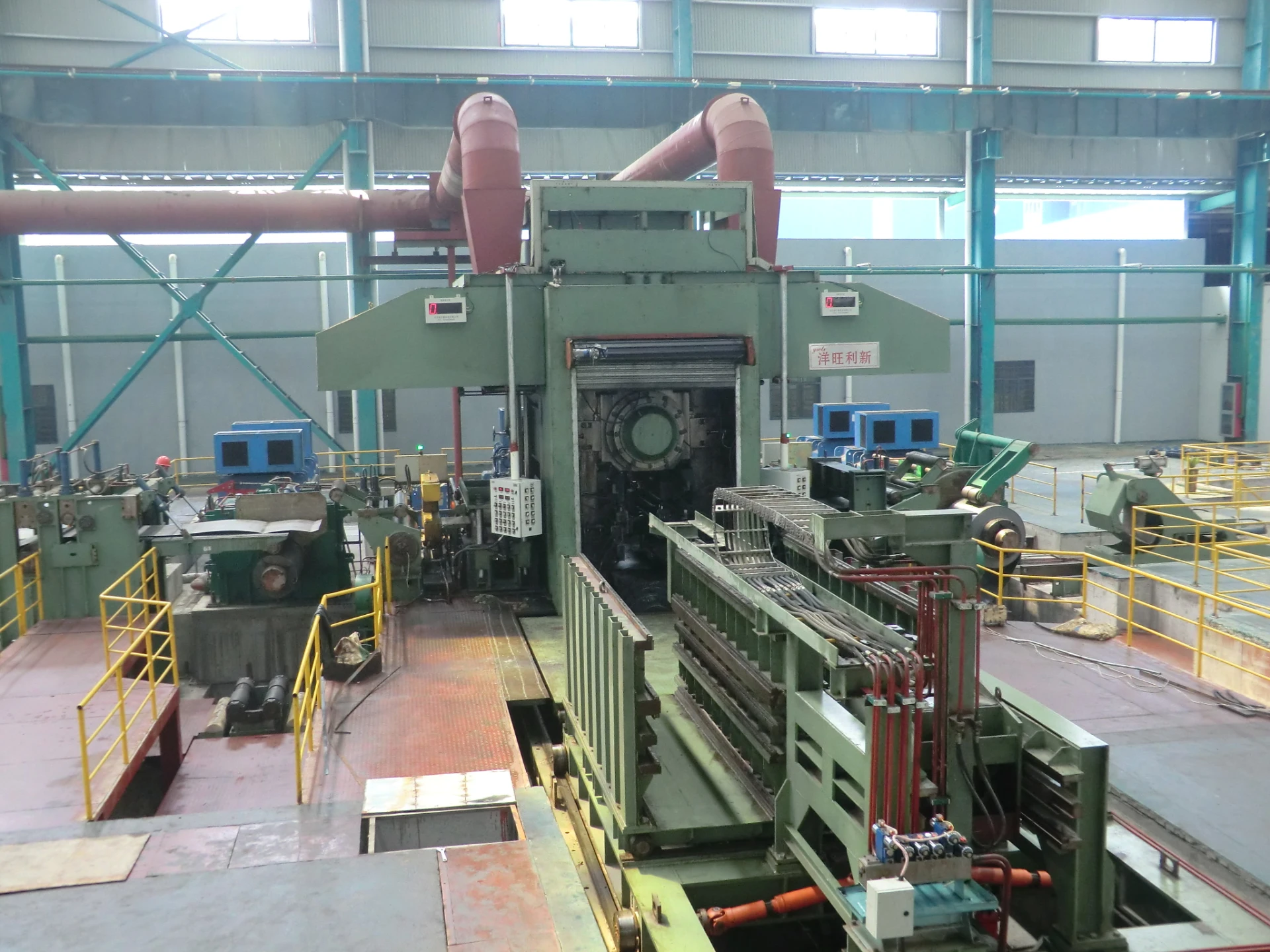

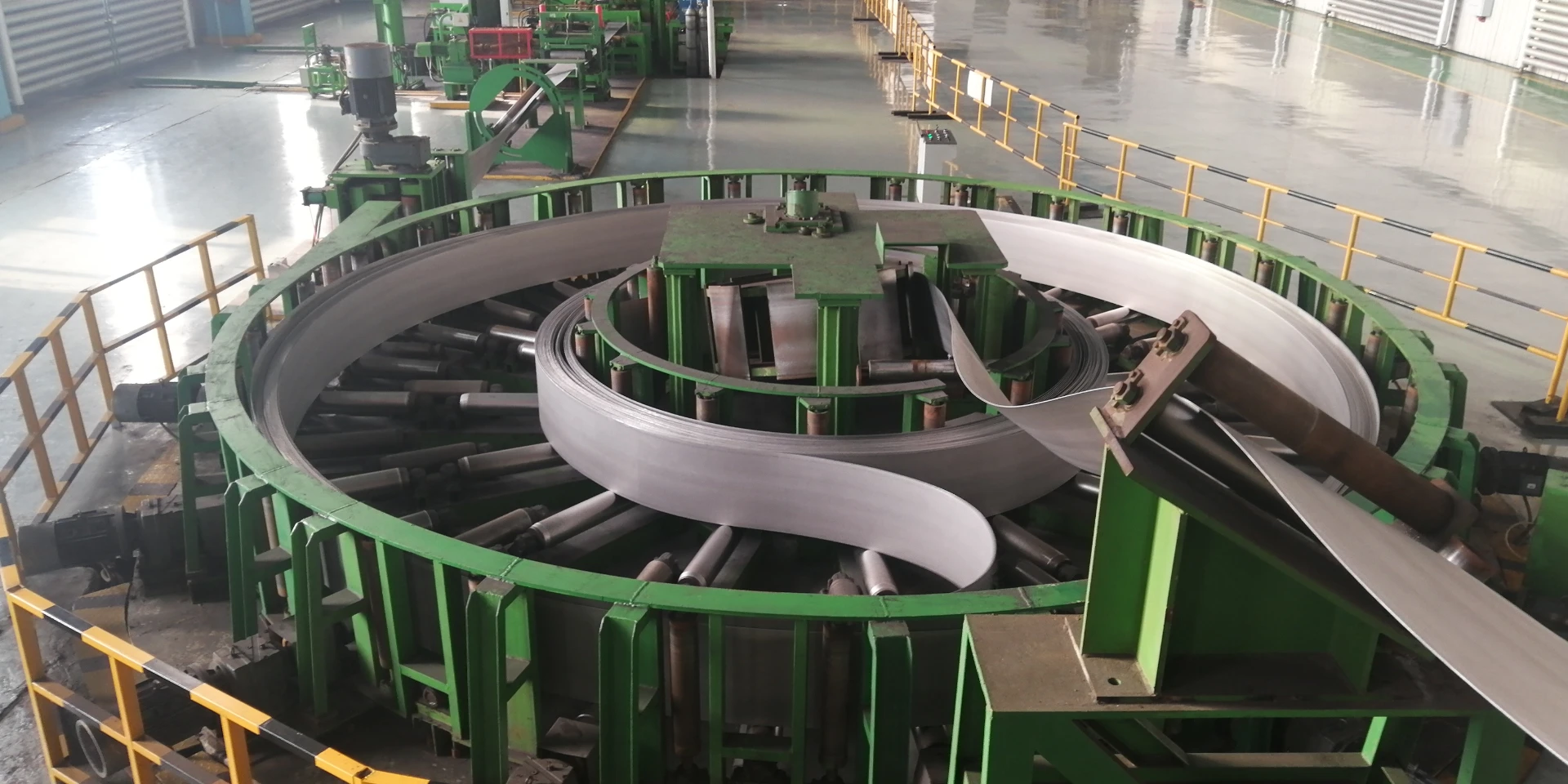
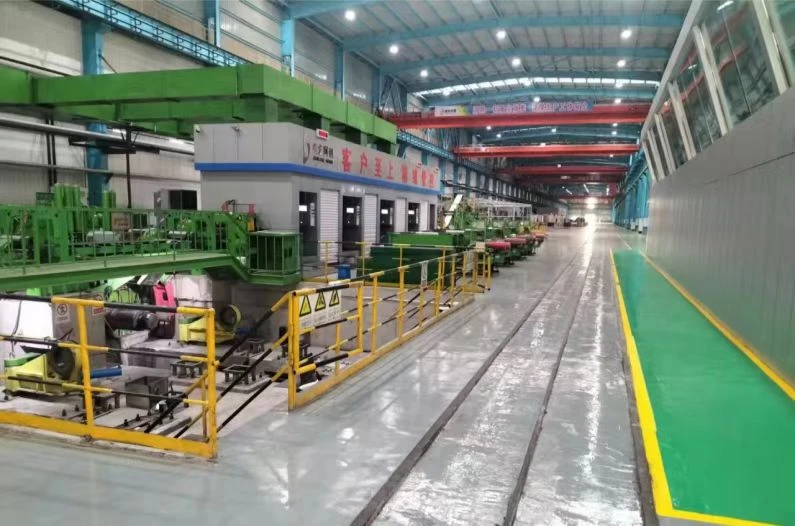
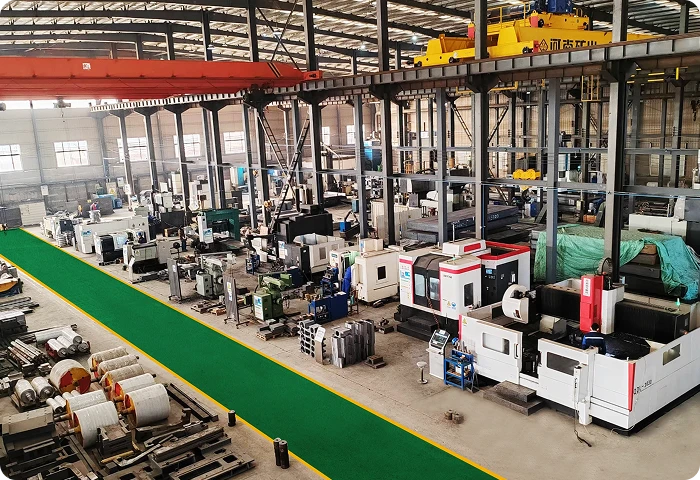
Yang Wang Li Xin operates a state-of-the-art facility over 66,000 square meters,and our manufacturing facility is fully equipped with high-tech machinery and high-capacity cranes. This enables us to handle large work pieces measuring 4.5m in width, 10m in length, and 1.5m in height, guaranteeing our capacity to produce 1800mm skin-pass mills and 1450mm rolling mills. The individual piece can weigh up to 100 tons.

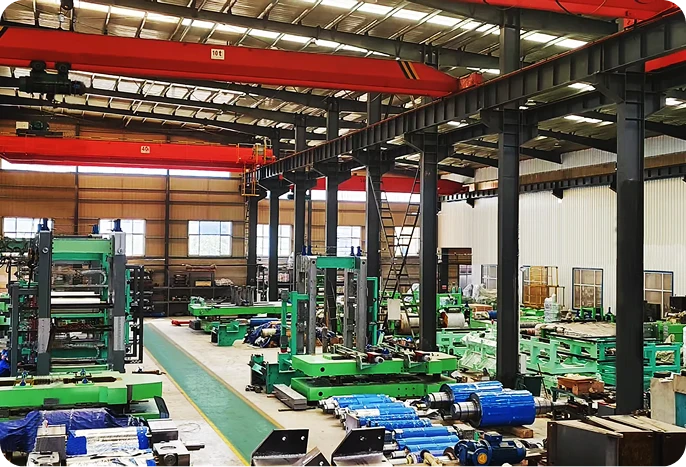

Quality is fundamental to the enterprise survival. We have established a comprehensive and meticulous quality management system and have successfully obtained ISO14000 certification. Starting from the design source, it supervises the entire production cycle, including design, procurement, processing, assembly, in-factory testing, installation, and online commissioning. The workshop is equipped with measuring tools like vernier calipers, spectrometers, hardness testers, and ultrasonic flaw detectors. They are used to check materials and control tolerances to ensure the final equipment meets or exceeds requirements. All products have a unique code, This enables the easy identification and traceability of the equipment components and ensures full control of quality.


-
 Stainless Steels and Their Processing in Reversing Cold Rolling MillsStainless steels are another important group of materials processed in reversing cold rolling mill s. Austenitic stainless steels, which are widely used in the food and beverage industry, architecture, and chemical processing, are particularly well - suited for cold rolling. The austenitic structure of these steels provides excellent corrosion resistance and formability. In the reversing cold roll
 -
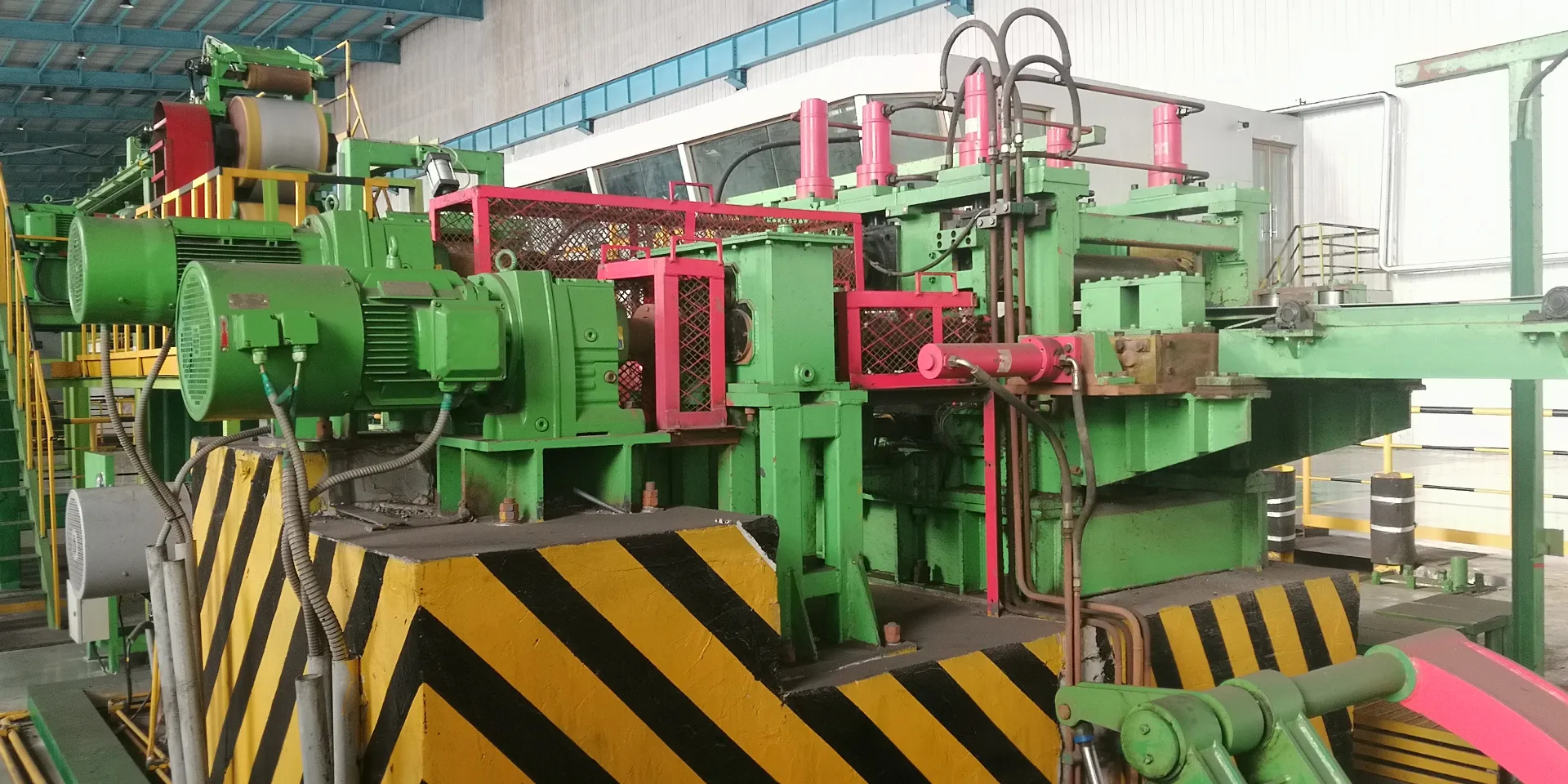 High-Quality AGC System for Steel RollingYang Wang Li Xin (YWLX), established in 2003, is a preeminent professional turn-key project provider specializing in metallurgical rolling machinery for the iron, steel, and non-ferrous industries, with a strong focus on automobile steel, plate, strip, and coil production. Since its founding, YWLX has been dedicated to the research and development of the agc system , a crucial device in the strip
 -
 Cladding Rolling MillIn the ever-evolving landscape of material engineering, cold-rolled steel strips have emerged as a fundamental component across countless industries. These strips, known for their superior surface finish and dimensional accuracy, play a critical role in applications ranging from automotive manufacturing to household appliances. Cold rolling refers to the process of strengthening steel by changing


